


Entering the Vietnamese market presents an incredibly lucrative opportunity for global brands, multinational corporations, and independent content creators. With a population exceeding one hundred million people, a rapidly expanding middle class, and one of the highest internet and smartphone penetration rates in Southeast Asia, Vietnam is a digital-first economy. Consumers here are highly engaged with video content across platforms such as YouTube, TikTok, Facebook Reels, and traditional broadcast television. However, capturing this audience requires more than just translating your marketing materials and adding subtitles. In an era of endless scrolling and short attention spans, auditory engagement is paramount. A commercial’s success often hinges entirely on the quality, tone, and relatability of the audio track accompanying the visuals.
For international producers and marketing agencies, navigating the complexities of audio production in a foreign language can be a daunting task. Hiring a Vietnamese voice actor is not as simple as selecting a pleasant-sounding demo from an online gig platform. The Vietnamese language is deeply nuanced, structurally complex, and heavily regionalized. A misstep in casting, dialect selection, or script adaptation can instantly alienate your target audience, making your brand appear out of touch or, in worst-case scenarios, unintentionally comedic. To ensure your commercial resonates authentically with local consumers, you must understand the linguistic landscape, the technical requirements of time-syncing, and the critical difference between mere translation and genuine cultural localization.
Understanding the Linguistic Nuances of Vietnam
Before you begin the casting process for your commercial, it is crucial to grasp the fundamental mechanics of the language. Vietnamese is a tonal language, which means that the pitch and inflection used to pronounce a word completely dictate its meaning. There are six distinct tones: flat (ngang), falling (huyen), rising (sac), dipping-rising (hoi), creaky-rising (nga), and heavy-falling (nang). Because of this tonal structure, the language inherently possesses a musical, rhythmic quality. When a native speaker delivers a line, they must navigate these tones flawlessly while simultaneously conveying the intended emotion of the script—whether that is excitement, empathy, urgency, or authority.
Amateur talents or inexperienced bilingual speakers often struggle to balance tonal accuracy with emotional performance. If a speaker flattens their intonation to sound more corporate or forces an unnatural enthusiasm, the tones can become distorted. This distortion not only sounds incredibly jarring to a native ear but can actually change the definitions of the words being spoken, leading to catastrophic messaging failures in a high-stakes advertising campaign. Professional voice actors have spent years mastering microphone techniques and vocal control, ensuring that their delivery remains emotionally compelling without ever compromising the strict tonal integrity of the vocabulary.
The Great Dialect Divide: North vs. South
Perhaps the most critical decision an international producer must make when casting for the Vietnamese market is selecting the appropriate regional dialect. Vietnam is geographically elongated, which has resulted in distinct regional accents that carry different cultural connotations and appeal to different demographics. Broadly speaking, the market is divided into the Northern dialect (centered around the capital, Hanoi), the Southern dialect (centered around the economic hub, Ho Chi Minh City), and the Central dialect.
The Northern accent is widely considered the standard for official national broadcasts, television news anchors, government announcements, and formal corporate presentations. It is characterized by its crisp, precise enunciation of consonants and strict adherence to traditional grammatical structures. If your commercial is promoting a luxury vehicle, a prestigious financial institution, a high-end real estate development, or a B2B software solution, a Northern accent often projects the necessary authority, trustworthiness, and sophistication required to win over a corporate or affluent audience.
Conversely, the Southern accent is widely perceived as warm, approachable, melodic, and dynamic. It is the undisputed champion of the fast-moving consumer goods sector, retail advertising, entertainment, and youth-oriented social media campaigns. Because Ho Chi Minh City is the commercial and entertainment capital of the country, the Southern accent dominates lifestyle commercials, food and beverage advertisements, and dynamic tech startups. If your brand wants to sound friendly, energetic, and relatable to the everyday consumer, a Southern voice talent is almost always the preferred choice.
The Central accent, while rich in heritage, is highly localized and features vocabulary that may not be universally understood across the country. Unless your commercial is hyper-targeted to a specific local demographic in cities like Da Nang or Hue, it is generally recommended to stick to either the Northern or Southern dialects for nationwide marketing campaigns to ensure maximum comprehension and mass appeal.
Overcoming the Challenges of Script Adaptation and Time-Syncing
One of the most common pitfalls international clients face is treating script preparation as an afterthought. Simply running your original English script through a machine translation tool or hiring a budget translator will result in an audio track that sounds robotic, unnatural, and structurally flawed. English is a stress-timed language, where rhythm is determined by the spacing of stressed syllables. Vietnamese, on the other hand, is a syllable-timed, predominantly monosyllabic language. The grammatical structures, idioms, and methods of expressing concepts differ wildly between the two.
This structural difference introduces significant challenges when dealing with time-syncing, often referred to as timing to picture. In commercial advertising, time is quite literally money. A 30-second television spot offers zero margin for error. Often, a sentence that takes five seconds to deliver naturally in English might take seven or eight seconds to articulate properly in Vietnamese because the language may require additional context or polite grammatical particles that do not exist in English. If a voice actor is forced to rush through a poorly translated script to fit a strict 30-second window, the performance will sound breathless, frantic, and entirely unpersuasive.
To prevent this, international brands must invest in professional transcreation and cultural localization rather than direct translation. A skilled localizer will analyze the creative intent, the target demographic, and the visual timing of the video, and then rewrite the script so that it feels natively conceived. They know how to trim redundant words, utilize cultural idioms, and adjust the pacing so the voice actor has the necessary breathing room to deliver a compelling, perfectly timed performance that aligns seamlessly with the on-screen action.
The Hidden Dangers of Amateur Studios and the Gig Economy
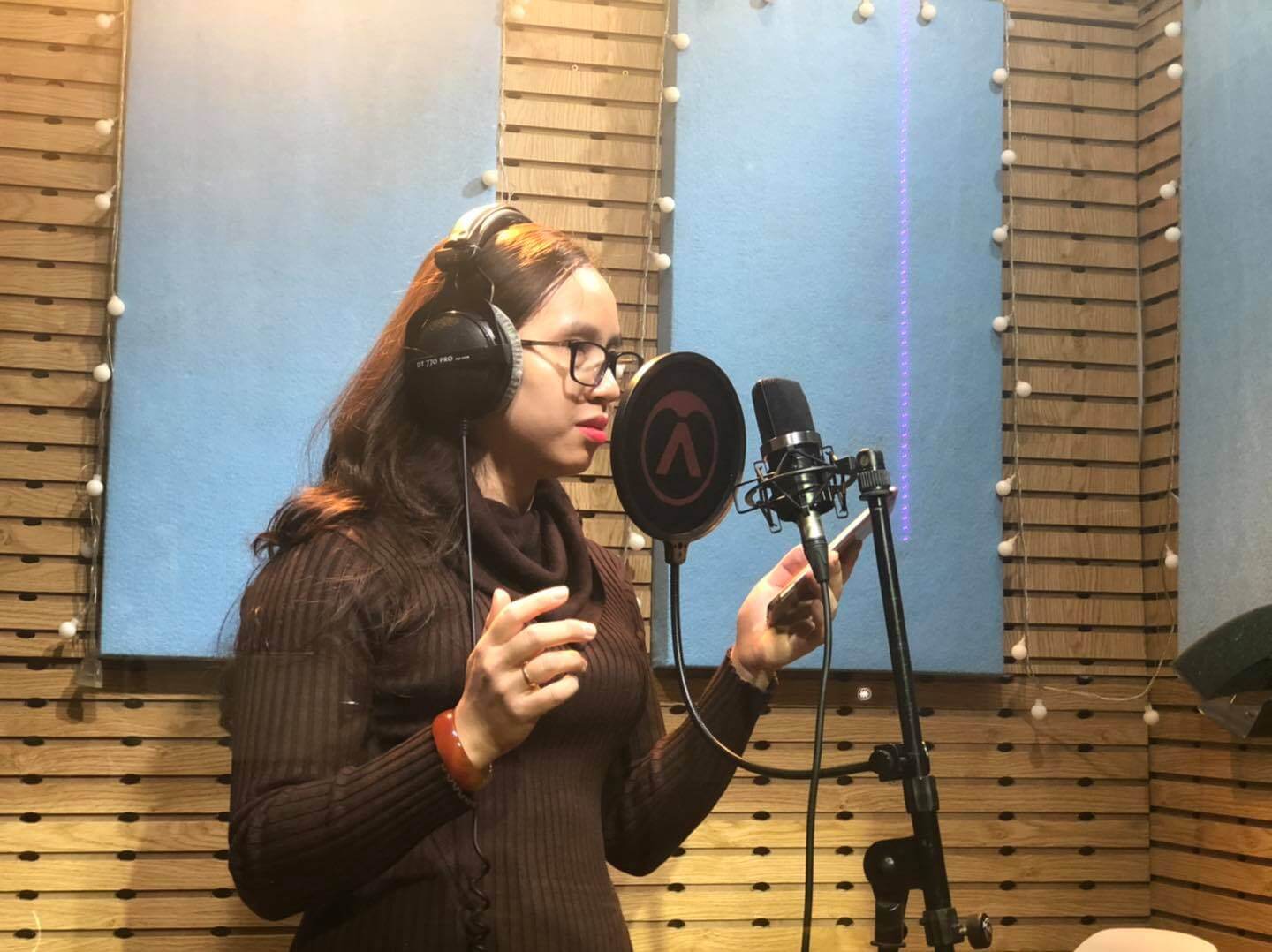
In an attempt to cut costs, many foreign producers turn to global freelance platforms to source talent. While these platforms offer convenience, they often harbor a hidden set of risks that can compromise the integrity of a high-budget commercial. Vietnam is a bustling, rapidly developing country characterized by intense urban density and ubiquitous motorbike traffic. Recording pristine audio in cities like Hanoi or Ho Chi Minh City requires serious investment in acoustic treatment and soundproofing.
Many unverified freelancers operate out of makeshift home studios that lack adequate isolation. This can result in final audio tracks contaminated with a high noise floor, room echo, or faint background disturbances like traffic noise, construction, or heavy tropical rain on tin roofs. Furthermore, amateur talent may lack the technical proficiency to deliver broadcast-standard files, often submitting audio with clipping, poor equalization, or incorrect sample rates.
For a commercial campaign that represents your brand’s reputation, pristine audio quality is non-negotiable. Professional studios and established local agencies ensure that every file delivered meets rigorous industry standards. They utilize industry-standard microphones, isolated vocal booths, and experienced audio engineers who meticulously clean and master the tracks before delivery, ensuring your video sounds polished and premium on any device, from a massive cinematic screen to a smartphone speaker.
A Step-by-Step Blueprint for a Flawless Recording Process
To guarantee a smooth, frictionless experience when commissioning audio for the Vietnamese market, international producers should adopt a structured approach. By front-loading the preparation and establishing clear lines of communication, you can eliminate the costly delays associated with endless revisions and misaligned expectations.
Develop a Comprehensive Creative Brief. Do not leave the performance to guesswork. Provide the talent or agency with a detailed breakdown of your target audience, the desired age range of the voice, the regional accent preference, and the overall emotional tone. If possible, provide reference links to existing commercials that capture the exact vibe you are aiming for.
Clarify Brand Pronunciation Guides. This is a frequently overlooked step that causes immense frustration during post-production. How do you want your foreign brand name or product features pronounced? Should the actor use a localized, phonetically adapted pronunciation that is easier for local consumers to digest, or do you require a strict, anglicized pronunciation to maintain global brand consistency? Providing a short audio reference file of the correct pronunciation is highly recommended.
Define Technical Deliverables Clearly. Communicate your technical requirements upfront. Specify the required file format, state whether you need the audio synced strictly to a video timecode, and outline your usage rights. Transparency regarding usage rights ensures accurate and fair quoting from the outset.
Request a Live Directed Session. For high-stakes commercial campaigns, relying entirely on asynchronous recording can be risky. Booking a live directed session via platforms like Source-Connect, Zoom, or Google Meet allows you and your local bilingual director to guide the talent in real-time. This immediate feedback loop ensures that the exact inflection, pacing, and emotional beats are captured perfectly on the first day in the studio, virtually eliminating the need for costly post-production pickups.
Partnering for Success in a Dynamic Market
Entering the Vietnamese market requires cultural sensitivity, technical precision, and a deep understanding of local consumer psychology. Attempting to manage this complex process from thousands of miles away can be incredibly challenging without the right boots on the ground. This is where partnering with a specialized, locally-based audio production agency becomes an invaluable asset for global brands.
A dedicated local partner acts as a critical bridge, absorbing the logistical friction of cross-border production. They maintain curated rosters of vetted, top-tier professional talents who have proven track records in commercial advertising. They provide bilingual directors who understand the creative intent of your English brief and can translate that seamlessly to the local talent in the booth. Moreover, they handle the rigorous quality assurance protocols, ensuring that the grammar is flawless, the audio is pristine, and the emotional resonance is perfectly calibrated for the local audience.
Ultimately, a localized commercial is not merely an exercise in translating words from one language to another; it is an exercise in translating trust, emotion, and brand identity. By prioritizing cultural authenticity, selecting the correct regional dialect, demanding professional studio acoustics, and collaborating with experienced local experts, you can ensure that your commercial not only speaks to the Vietnamese consumer but genuinely connects with them. Investing in the right voice over isn’t just about finishing a task on your project list—it’s about opening the door to a successful, long-term relationship with one of the most vibrant markets in the world today.