


Finding the perfect Vietnamese voice over isn’t just about picking a voice that sounds like a charismatic news anchor or a friendly neighbor. It’s a technical puzzle. You’ve probably been there: you have a slick 60-second English master video, the edit is frame-perfect, and the music swells right at the climax. Then, you get the Vietnamese voice over file back, and suddenly, the audio is still running while the screen has already faded to black. Or worse, the voice actor has to speak at 1.5x speed just to fit the sentences into the time-coded slots, making your luxury brand sound like a disclaimer for a pharmaceutical ad.
In the world of localization, we call this “The Expansion Factor,” and when it comes to a Vietnamese voice over, it can be a silent project killer if you don’t plan for it.
1. The Math Behind the Silence: Why Vietnamese Expands
When you dive into a Vietnamese voice over project, the first thing you need to realize is that English and Vietnamese are built differently. English is a stress-timed language; Vietnamese is a tonal, syllable-timed language.
In English, we can smush words together. We have “I’m,” “Don’t,” and “It’s.” Vietnamese doesn’t really do contractions. Every word is a distinct pulse. Furthermore, to convey the same level of politeness or technical nuance found in an English sentence, a Vietnamese voice over script often requires more syllables.
For example, a simple English phrase like “Contact us today!” (5 syllables) often becomes “Hãy liên hệ với chúng tôi ngay hôm nay!” (9 syllables). That is nearly double the length. If your Vietnamese voice actors are forced to cram those 9 syllables into a 2-second window designed for 5, the quality of the performance drops instantly. This is why “word-for-word” translation is the enemy of a high-quality Vietnamese voice over.
2. Timing is Everything: The Sync Struggle
If you are producing an e-learning module or a corporate training video, timing issues in a Vietnamese voice over lead to a “disjointed” feel. The student sees a graphic about “Safety Protocols” while the Vietnamese voice talent is still finishing the section on “Introduction.”
To avoid this, your Vietnamese voice over process must include a “script adaptation” phase. This isn’t just translation; it’s surgery. A skilled script adapter looks at the time-codes of the original video and “trims the fat” from the Vietnamese text without losing the meaning. They might swap a formal four-word phrase for a two-word equivalent that carries the same weight. Without this, even the best Vietnamese voice actors in the world will struggle to make the content sound natural.
3. The Tonal Trap: Why Pitch Affects Pacing
Vietnamese has six tones. This is a massive factor for any Vietnamese voice over project. Because the meaning of a word changes based on its pitch (e.g., ma, má, mà, mả, mã, mạ), Vietnamese voice actors cannot simply “speed up” like English speakers can.
In English, if we need to go faster, we flatten our intonation slightly and rush the vowels. In a Vietnamese voice over, if you rush too much, the tones become blurred. When tones blur, the meaning disappears. This means a Vietnamese voice over requires more “breathing room” in the edit than many other languages. If your video is wall-to-wall talking with no pauses, your Vietnamese voice talent will sound breathless, and your audience will feel exhausted.
4. Cultural Nuance and the “Invisible” Words
When hiring a Vietnamese voice talent, you’re also hiring a cultural gatekeeper. English is quite direct. Vietnamese, however, uses a complex system of pronouns based on age, gender, and social status.
If your English script says “You can save money,” the Vietnamese voice over needs to decide who “You” is. Is it bạn (friend), quý khách (valued customer), or anh/chị (older brother/sister)? These choices affect the syllable count and the “rhythm” of the sentence. A professional Vietnamese voice over agency will ask you these questions before the talent hits the record button. If they don’t, you might end up with a script that fits the time but sounds incredibly rude or awkwardly formal to a local ear.
5. Working with Professional Vietnamese Voice Actors
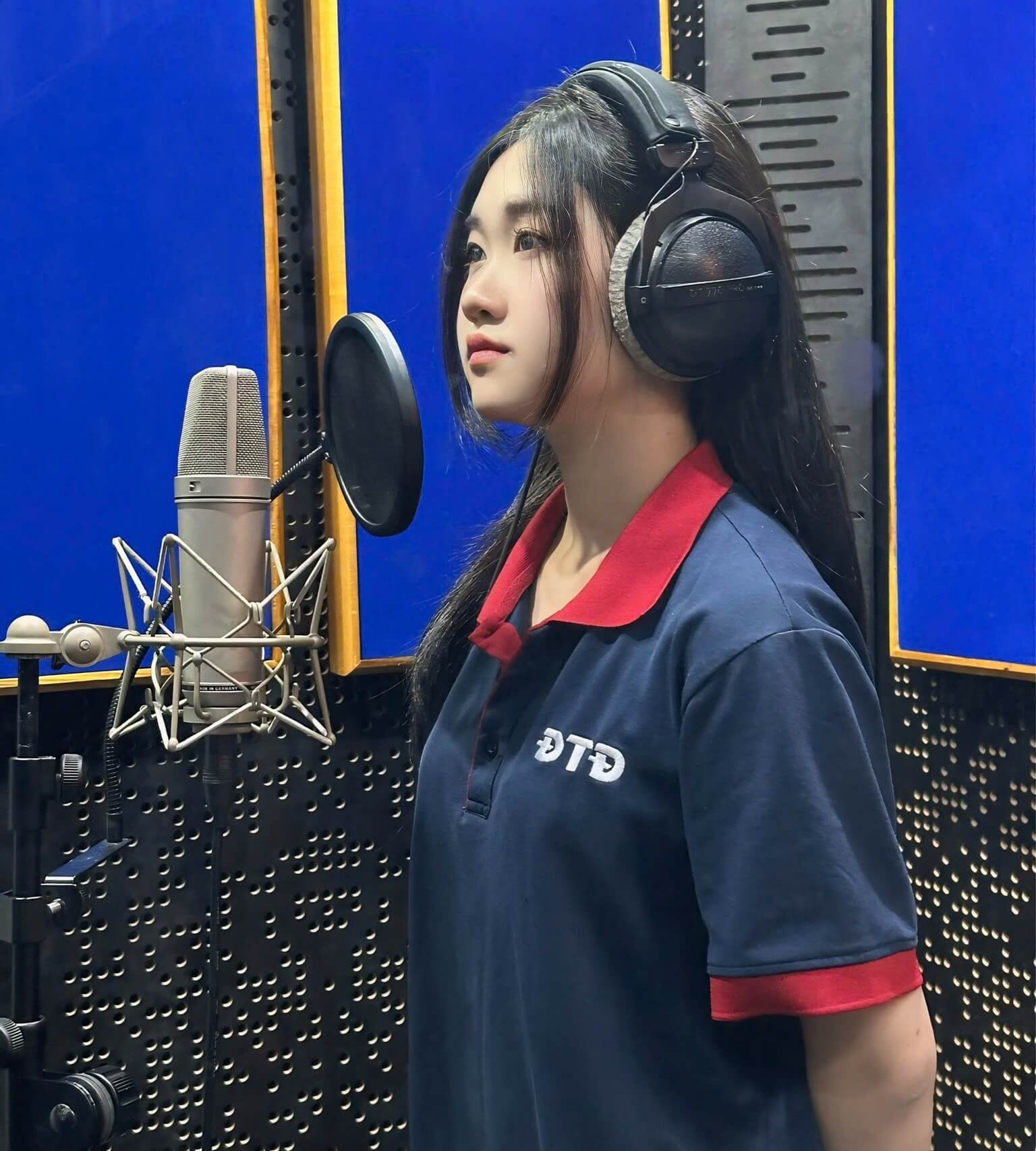
You might be tempted to use a bilingual staff member or a cheap AI voice to save money on your Vietnamese voice over. Here is why that usually backfires: Vietnamese voice actors are trained in “breath control” and “syllable clarity.”
A professional Vietnamese voice talent knows how to modulate their voice so that even if the script is a bit tight, it still feels relaxed. They know where to place the “micro-pauses” that allow the listener to process information. When you work with experienced Vietnamese voice actors, you aren’t just paying for a voice; you are paying for the ability to make a difficult script sound effortless.
6. Practical Tips to Save Your Vietnamese Voice Over Project
So, how do you ensure your project doesn’t fall apart during the recording session? Here is a checklist for a successful Vietnamese voice over workflow:
A. The 20% Rule
When writing your master English script, leave 20% of the video as “dead air” or background music. This buffer is a lifesaver for the Vietnamese voice over. It gives the translator and the talent the room they need to express the message clearly without racing against the clock.
B. Provide a Reference Track
Don’t just send a script to your Vietnamese voice talent. Send the original English video. Vietnamese voice actors need to see the visual cues to understand the “energy” required. If the English speaker is excited, the Vietnamese voice over should match that energy—but they need to know exactly when that excitement needs to peak.
C. Use Time-Coded Scripts
Never send a plain Word document for a Vietnamese voice over. Your script should look like this:
[00:05 – 00:10] English: “Welcome to our new platform.”
[00:05 – 00:10] Vietnamese: “Chào mừng bạn đến với nền tảng mới của chúng tôi.”
This forces the translator to realize, “Hey, I only have 5 seconds for this,” and they will adjust the Vietnamese voice over text accordingly.
7. The Post-Production Polish
Once the Vietnamese voice over is recorded, the work isn’t done. A common mistake is just dropping the audio file into the timeline and hitting “export.”
Because Vietnamese is so rhythmic, a sound engineer who doesn’t speak the language might accidentally cut off the “tail” of a tone, which can change the word’s meaning. It is always best to have your Vietnamese voice over agency handle the “layback” (syncing the audio to the video). They will ensure that the Vietnamese voice talent’s performance aligns perfectly with the visual transitions.
8. Why VNVO Studio is Your Best Bet for Vietnamese Voice Over
At VNVO Studio, we’ve handled thousands of hours of Vietnamese voice over for global brands. We know the pitfalls. We don’t just hand a script to our Vietnamese voice actors; we vet the translation for timing, tone, and cultural fit first.
Our roster of Vietnamese voice talent includes specialists in everything from high-energy commercials to technical medical narrations. We understand that a Vietnamese voice over isn’t just a translation—it’s a performance that needs to live and breathe within the constraints of your video.
Conclusion: Don’t Let Your Message Get Lost in Sync
A video is a massive investment. Don’t let the final step—the Vietnamese voice over—be the thing that makes it look unprofessional. By understanding the expansion of the language, the importance of tonal clarity, and the need for expert Vietnamese voice actors, you can create content that resonates deeply with the Vietnamese market.
Remember: in a Vietnamese voice over, less is often more. Give your Vietnamese voice talent the space to speak, give your script the room to breathe, and your audience will actually listen.
Ready to start your next Vietnamese voice over project? Let’s make sure your timing is perfect from the first take. Contact us to browse our selection of Vietnamese voice actors and get a quote that includes professional script adaptation as standard.