


Despite the rapid growth of AI, global brands in 2026 still strictly require a real Vietnamese voice talent for their marketing and commercial campaigns. AI currently fails to grasp deep cultural nuances, regional dialects, and the natural emotional pacing needed to build consumer trust. VNVO Studio ensures brand safety by providing 100% authentic, highly skilled Vietnamese voice actors for all audio projects.
What is the exact difference between AI generators and real Vietnamese voice actors?
The core difference lies in emotional intelligence and tonal accuracy. While AI offers synthetic speed, real Vietnamese voice actors naturally adjust their breathing, micro-expressions, and regional accents to match the script’s subtext. This creates a genuine connection that prevents audiences from skipping the ad.
Let’s look at the reality of the language. Vietnamese is a complex tonal language with six distinct tones. A slight pitch miscalculation by a machine can completely change the meaning of a word, leading to severe brand embarrassment. Vietnamese voice actors do not just read words off a page; they act.
For example, if your brand needs a voice for a family-oriented Lunar New Year commercial, clarity is not enough. The voice must exude warmth, nostalgia, and empathy. AI models currently string together phonetic sounds based on probability. They cannot replicate the subtle “smile” in a human voice or the slight hesitation that makes an apology sound real.
Feature Comparison: AI vs. Human Talent
| Feature | AI Voice Generation | Real Vietnamese Voice Talent (VNVO Studio) |
| Emotional Depth | Flat pacing, struggles with empathy and complex arcs. | Nuanced, adaptable, and capable of complex acting. |
| Language Tones | Often mispronounces local slang and tonal shifts. | Perfect native pronunciation and regional dialects. |
| Creative Direction | Requires tedious prompt engineering for minor tweaks. | Takes direct feedback instantly in the studio. |
| Brand Safety | High risk of robotic tone and copyright issues. | 100% human authenticity and clear usage rights. |
Why is human emotion critical for Vietnamese dubbing projects?
Professional Vietnamese dubbing requires real humans because it demands exact lip-syncing, localized cultural transcreation, and the replication of organic physiological sounds like breaths, sighs, and laughter. AI cannot seamlessly match a localized script to the on-screen physical acting of an international character.
Dubbing is an intricate art form, vastly different from a standard voice-over. When international films or global TVCs enter the local market, they rely on expert Vietnamese dubbing to localize the content without losing the original emotional impact.
Here is why human professionals remain irreplaceable:
Lip-Sync Precision: A human actor watches the screen and matches the cadence of their spoken words to the precise mouth movements of the original on-screen actor. They know exactly when to stretch a vowel or rush a consonant to fit the visual frame.
Physiological Authenticity: Acting involves breathing. A sudden gasp, a tired sigh, or a genuine chuckle cannot be authentically programmed. Real humans naturally integrate these micro-sounds into their performance.
Cultural Transcreation: Direct translations often do not fit the timecode. A human actor can improvise, swapping a long translated phrase for a short, punchy local idiom that fits the required two-second window.
How does VNVO Studio select the right Vietnamese voice talent for your brand?
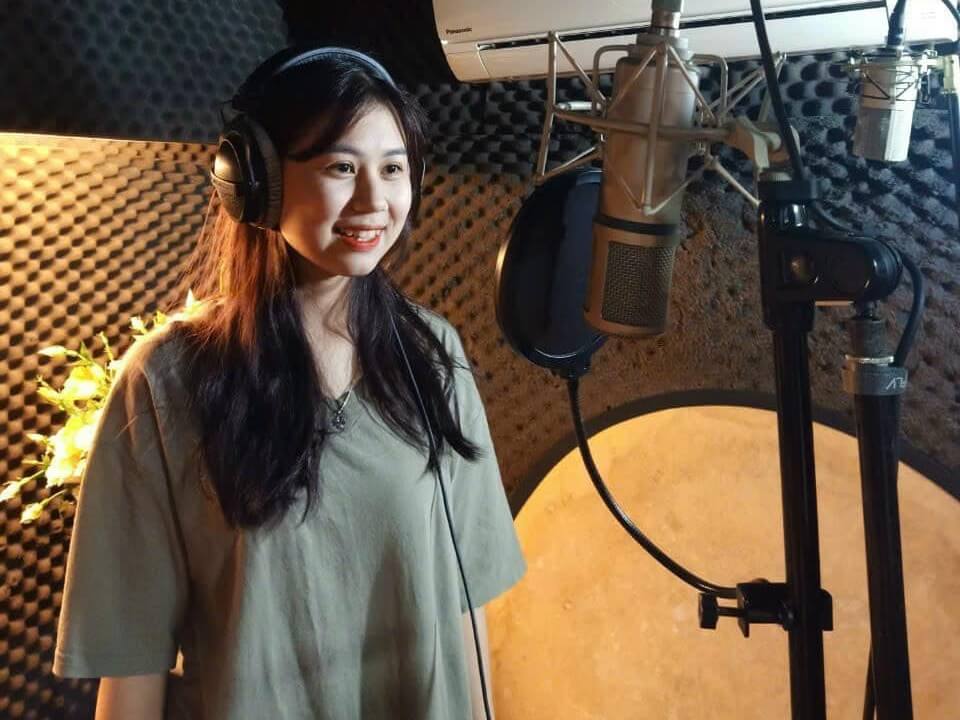
VNVO Studio produces exceptional audio by combining rigorous talent casting, state-of-the-art acoustic treatment, and expert human direction. We match the specific physiological vocal traits of our Vietnamese voice actors to your brand’s unique archetype and target demographic.
Delivering premium audio is not just about having an expensive microphone; it is about the entire production ecosystem.
First, we focus on Expert Casting. A high-energy fashion brand targeting teenagers requires a vastly different tone than a corporate banking explainer video. Our casting directors personally vet and match talents based on the exact persona detailed in your brief.
Second, the recording environment is critical. All sessions are conducted in acoustically treated, soundproof studios. This ensures an ultra-low noise floor, capturing the pristine, raw texture of the human voice—something that AI filters often digitally compress and ruin.
Finally, we rely on Human Direction. During a recording session, our audio directors provide real-time feedback to the Vietnamese voice actors. They might say, “Smile more on the final call-to-action,” or “Drop the pitch slightly to sound more authoritative.” This immediate, empathetic adjustment is the hallmark of premium audio production.
Are real Vietnamese voice actors more expensive than AI generators?
While AI generators have lower upfront costs, hiring real Vietnamese voice actors provides a vastly superior Return on Investment (ROI). Human talents prevent costly revisions, eliminate brand damage from poor localization, and increase consumer conversion rates through genuine emotional engagement.
When analyzing marketing costs, looking solely at the initial invoice is a mistake. Yes, generating a synthetic voice track might cost less today. However, the hidden costs are staggering. In the modern digital landscape, campaigns using robotic voices suffer significantly higher ad-skip rates on platforms like YouTube and TikTok because consumers instantly recognize and tune out synthetic media.
Consider the cost of revisions. When an AI mispronounces a brand name, engineers must spend hours tweaking parameters, often settling for a mediocre result. With a real Vietnamese voice talent, corrections take seconds. You simply ask the actor to repeat the line with a different tone.
What are the common mistakes when bypassing human talent in audio production?
Common mistakes include ignoring local dialects, failing to adjust pacing for visual cuts, and relying on flat tonal delivery that alienates the local audience. Brands often face severe backlash for prioritizing automated speed over genuine cultural connection.
The allure of automated audio often leads marketing teams into predictable traps. The most prevalent error is the homogenization of tone. AI models tend to average out human speech patterns, resulting in an incredibly boring delivery that lacks the “hook” needed for modern attention spans.
Another major pitfall is the mishandling of code-switching. Commercial scripts frequently blend English brand names with native text. AI often struggles to seamlessly transition between the two languages, either applying a heavy foreign accent to the local words or mispronouncing the English term entirely. A professional Vietnamese voice talent navigates these linguistic shifts effortlessly.
By partnering with VNVO Studio, international brands guarantee that their message is delivered with the exact intent, passion, and cultural respect required to succeed in the local market.